

WHO WE ARE
Together We Thrive: The Significance of Climate Strategy at Travelers
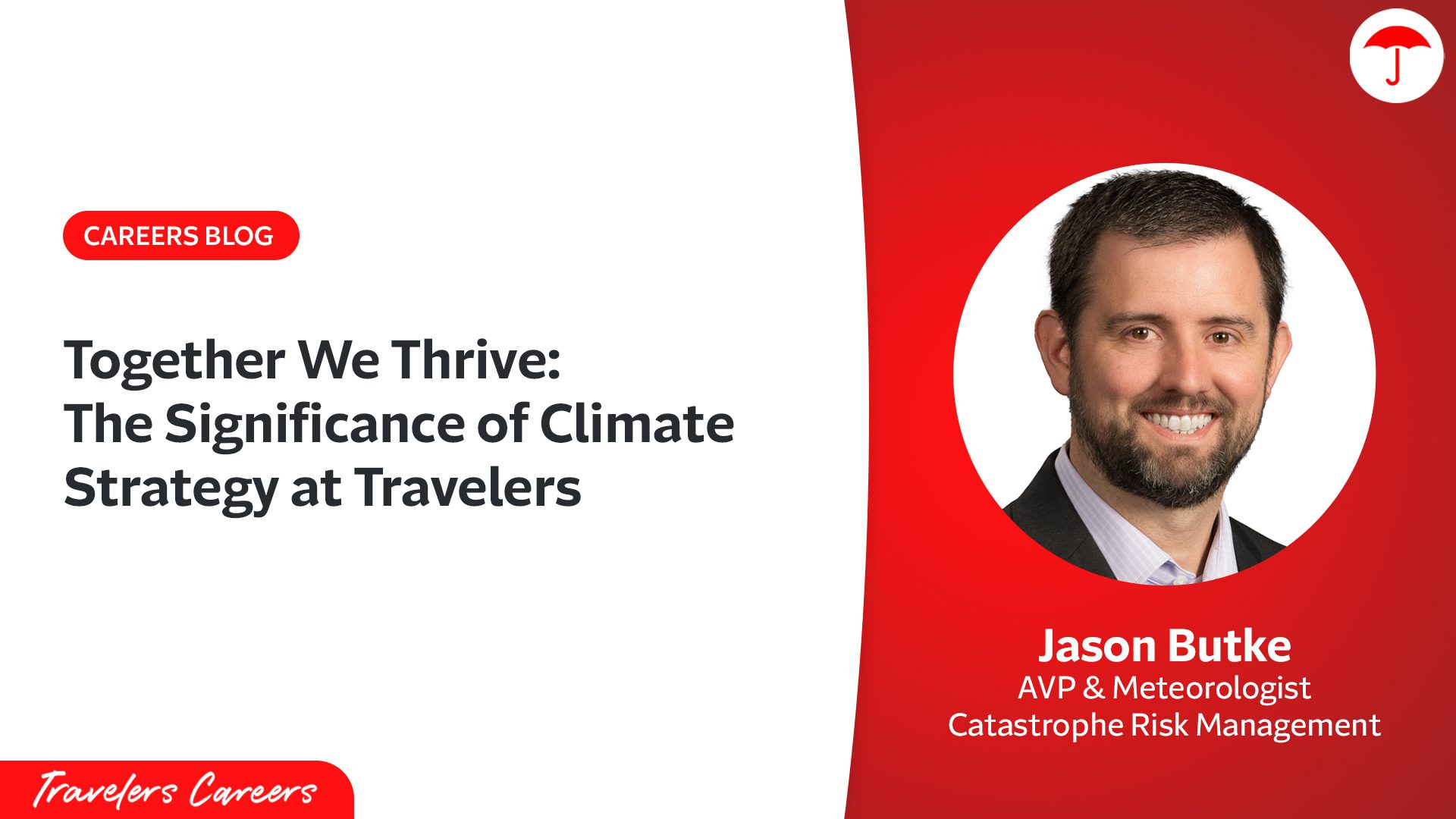
Jason Butke, AVP and Meteorologist in Enterprise Catastrophe Risk Management, leads a team tasked with weather and climate research and analytics. His team’s goal is to help our business leaders understand the impact of weather and climate-related issues on Travelers so that the company can make informed decisions about capital allocation, risk selection, pricing, real-time event response and more.
“We get into the science of natural catastrophes and the risk they present,” he explains. “Are they getting worse? More frequent? More severe? A lot of our team’s time is spent trying to answer those questions.”
Each year, Jason’s team performs a deep-dive review of how a changing climate is influencing weather risk or patterns for a specific peril. Within the last five years, the team completed reviews for hurricanes and wildfires and is now turning its attention to additional weather perils.
Jason’s team uses scientific data to help Travelers better prepare for the changing environment and risk landscape. “The question at hand is how the potential impacts vary by peril and whether those environmental changes are meaningful or material to Travelers,” Jason says. Among other things, his team’s analyses inform the company’s view of catastrophe risk and underwriting decisions and help our Claim team identify the appropriate number of staff needed during hurricanes.
“It’s important to put climate into the context of overall trends, taking a thoughtful and comprehensive approach to evaluating climate risk in Travelers’ underwriting decisions,” Jason explains. The company is mindful of the importance of non-weather-related trends that have a significantly greater impact on the risks his team writes. These include inflation, population growth in high-risk areas, urban expansion and aging infrastructure. “As the risk landscape changes, we can’t sit idle when determining how we select and price risks,” he says. “Understanding climate impacts helps us transform for the future and achieve long-term economic sustainability.”
Whether Jason and his team are looking ahead to the next couple of days, years or decades, the climate information they provide helps Travelers anticipate customers’ needs and evaluate catastrophe risk to appropriately underwrite and price policies – all of which is integral to the company’s long-term success.
In considering how others can help create sustained value for Travelers, Jason encourages employees to “keep asking tough, thought-provoking questions about how things can be better, and then help identify solutions that will help drive long-term success.”
SUBSCRIBE TO GET OUR LATEST BLOGS
Want to stay up to date? Have stories sent directly to your email inbox.
